

iPad Mini 8 PIREP: The best iPad for pilots Apple has made
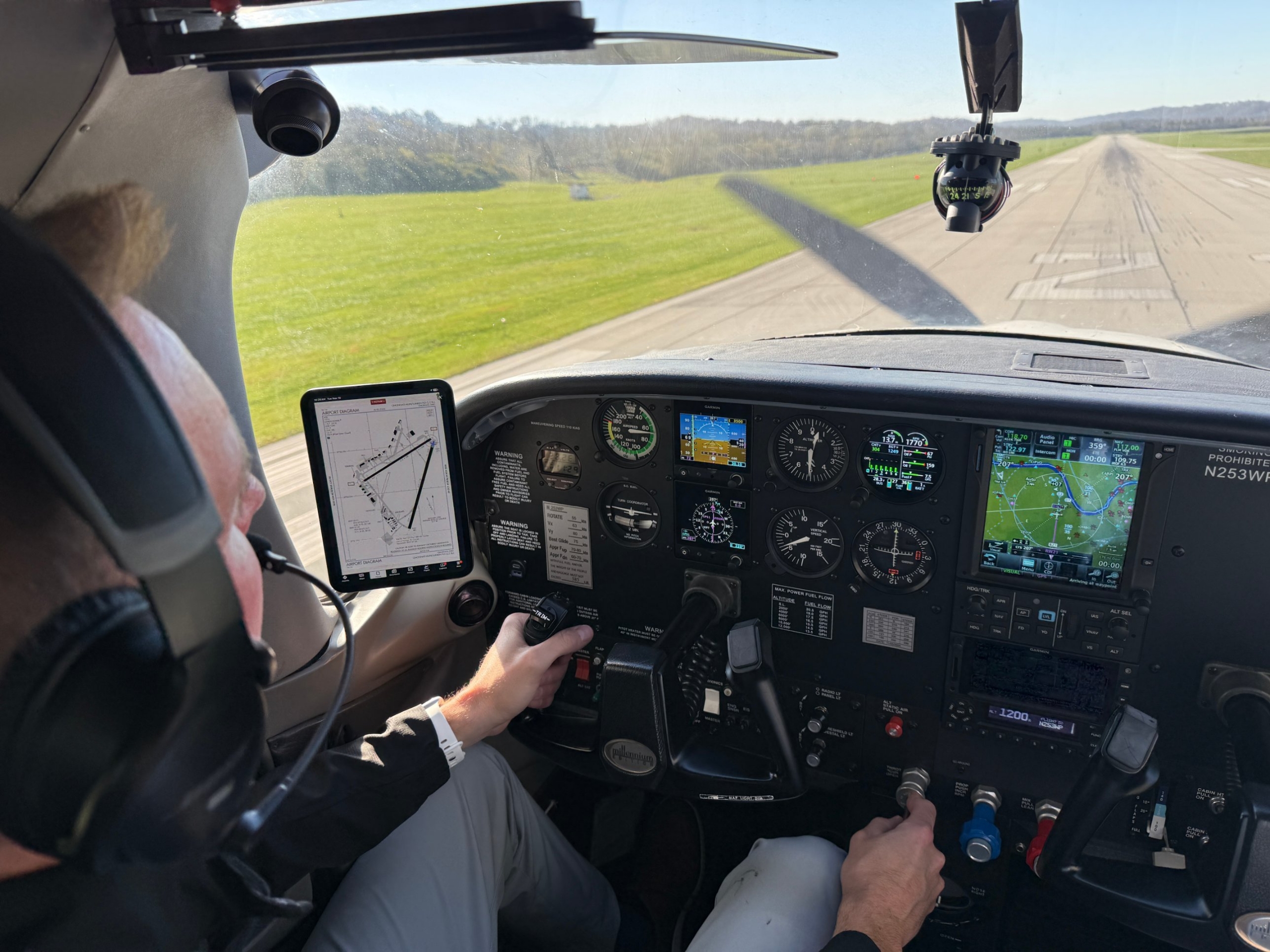
Let’s get right to the point–after flying with the new iPad Mini in a Cessna 182 and a Cirrus SR22, we feel this is the best iPad for pilots that Apple has ever made. Part of that is subjective, based on our ongoing preference for the smaller size and its ability to fit in just about every airplane. Beyond that, the new iPad mini sets itself apart from previous models with its bright OLED display, optional nano-texture screen coating, fast charging, and a lightning-fast processor. Add it all up, and it makes the perfect cockpit companion for pilots.
What’s new in the iPad Mini
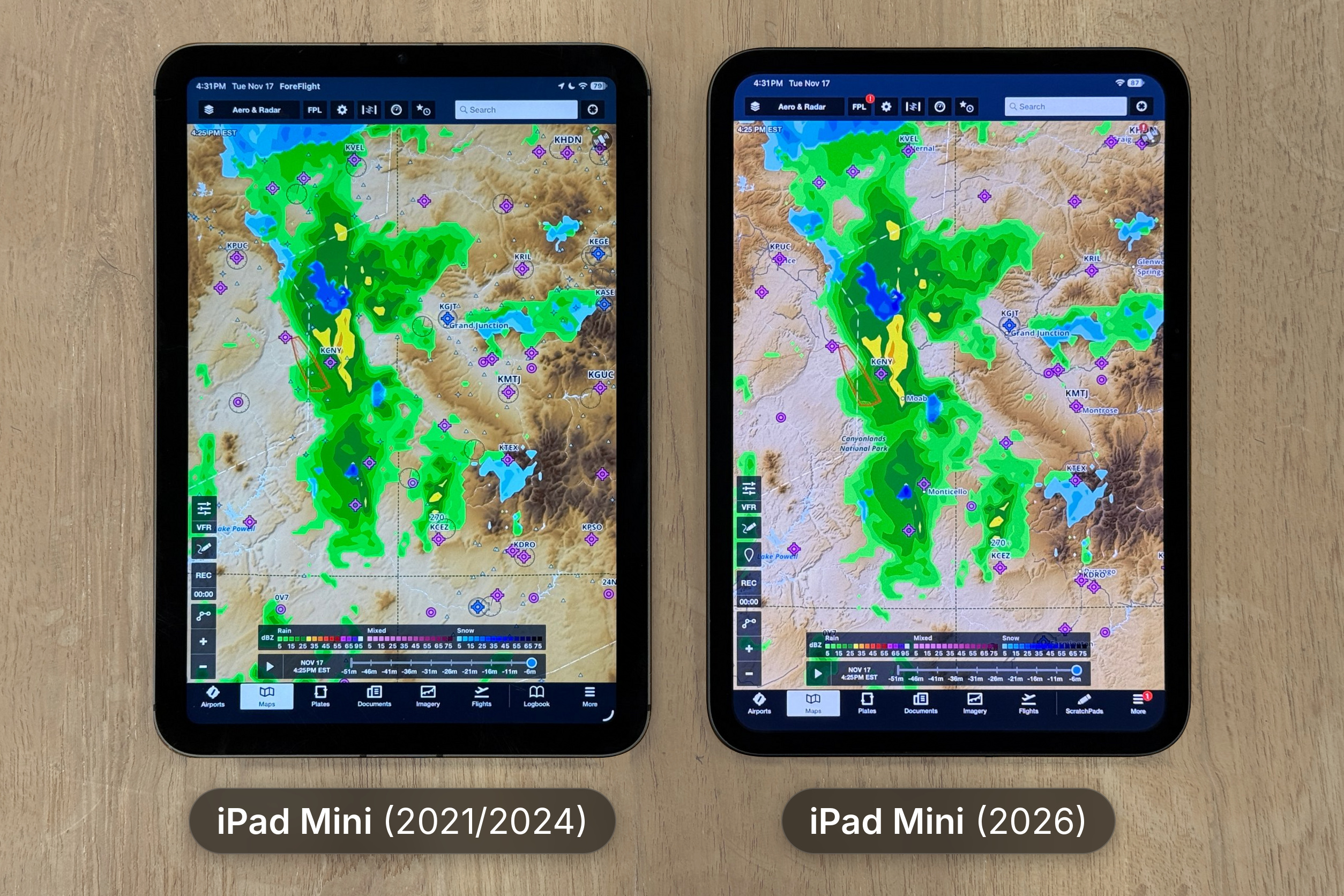
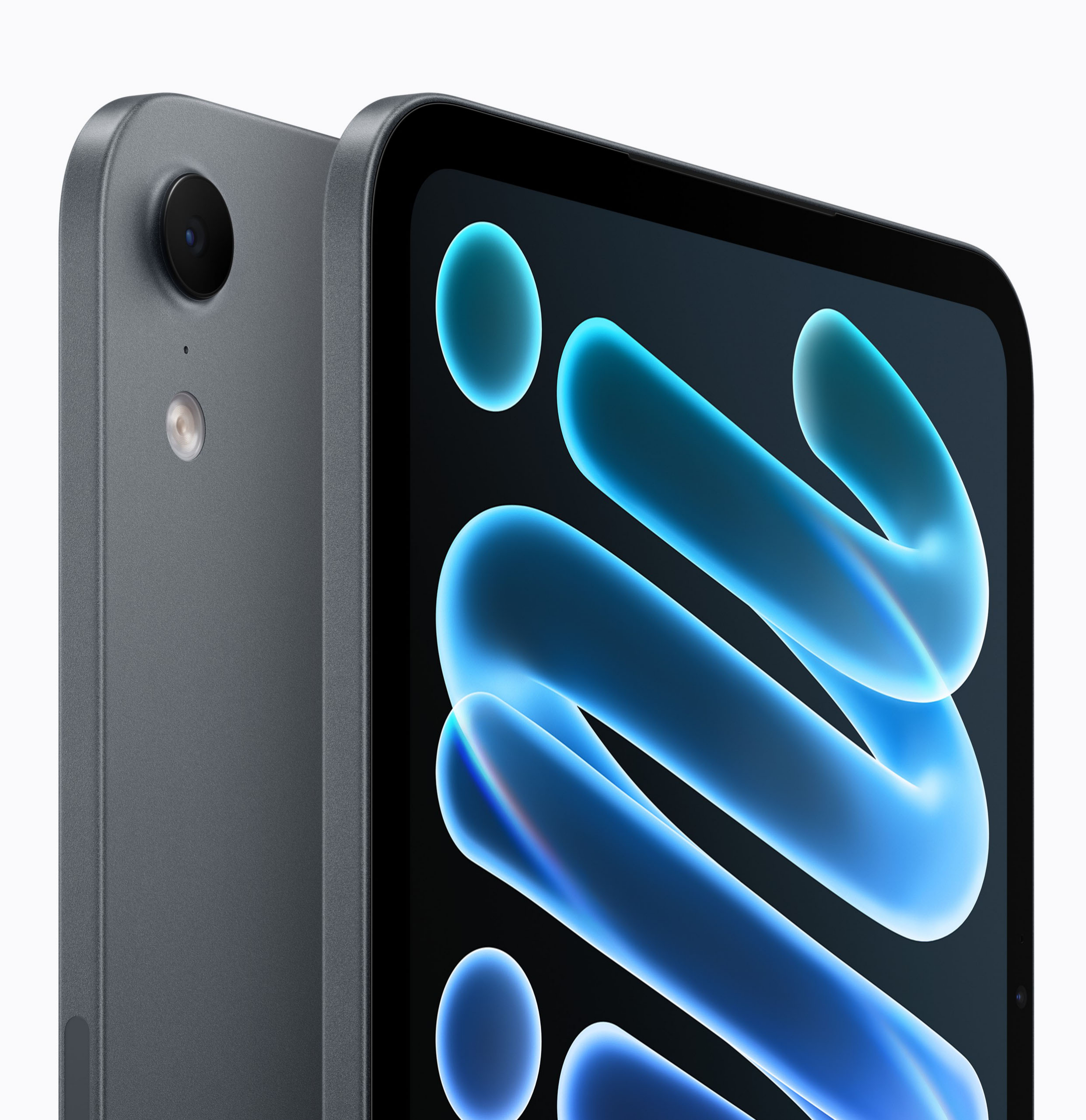
Apple officially refers to the new model as the iPad Mini A20 (with A20 referring to the new processor), but since it represents the 8th generation of this size, many are simply calling it the iPad Mini 8. At first glance, the new Mini looks very similar to its predecessors. It is 0.08″ narrower and 0.04″ thinner, has slimmer bezels, and weighs 14% less. Here are the new and old models side by side:
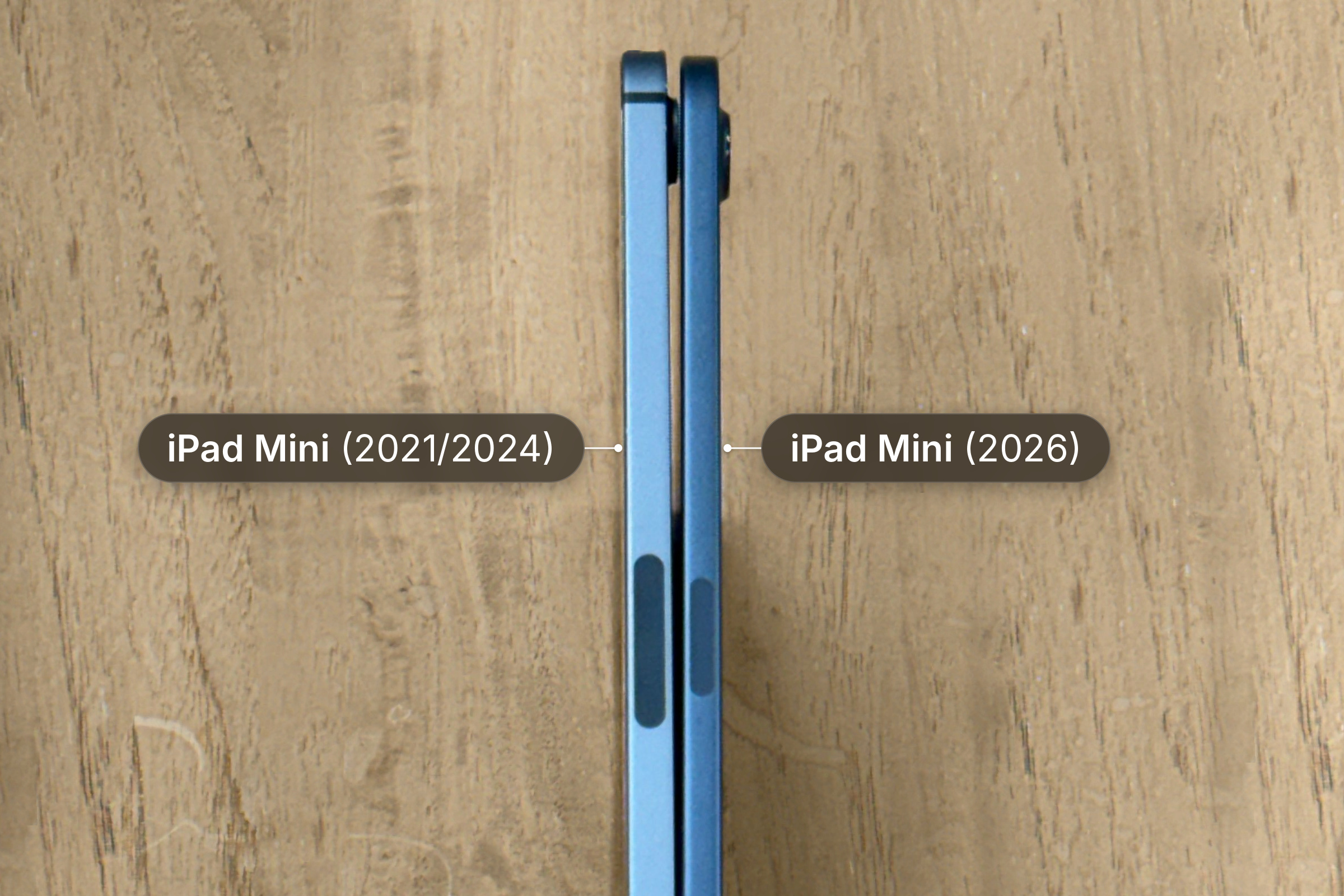
And here’s an image comparing the width. The lighter weight is a nice improvement and definitely noticeable when you’re holding both models side by side:
We previously covered all the new features and specs in the iPad Mini in this initial report. Here’s a quick recap:
OLED Screen: This is the first iPad Mini to use Apple’s Super Retina XDR OLED screen. It’s 20% brighter than previous models and delivers the best night-time viewing experience, thanks to OLED’s ability to produce true blacks and dim to just 1 nit.
Nano-texture screen coating (optional): You can now upgrade your iPad to a matte finish, which significantly improves readability in sunny conditions. More on this later.
Thinner and lighter: The Wi-Fi model is now 5.4 mm (0.21″) thick and weighs 0.56 lbs, down from 6.3 mm and 0.65 lbs. The cellular model weighs 0.58 lbs. Apple says it’s the lightest iPad ever.
Processor: The new mini uses the A20 Pro chip, which is the same one that debuted in the iPhone 18 Pro. Apple claims up to 60% faster CPU and 2.7x faster graphics performance than the A17 Pro in the previous mini. The 128GB and 256GB models get a 5-core CPU, while the 512GB model gets a 6-core CPU and a second Neural Engine.
Water and dust resistance: It has an IP67 rating, good for up to 30 minutes at 1 meter deep. This is a first for any iPad, and will provide peace of mind during a rainy preflight or spilled coffee from your copilot (yes, that’s happened to us more than once).
Fast charging: The battery will charge up to 50% in 30 minutes when using a USB-C adapter rated at 35W or higher. The adapter in the box is still 20W, but plenty of inexpensive aftermarket high-wattage chargers are available.
Wireless: Apple’s N1 chip adds Wi-Fi 7 and Bluetooth 6. Cellular models get Apple’s C2 modem, which Apple says is up to 50% faster. As with all other iPad models, only the cellular model includes a built-in GPS receiver.
Speakers: A new Acoustic Display system plays audio through the screen and enclosure, eliminating the speaker holes. This also helps enable the IP67 rating.
Front camera: The 12MP front camera moves to the long edge, so it’s centered when you hold the iPad in landscape for video calls.
Despite all of these changes, the form factor remains nearly identical to the two previous iPad Mini models from 2021 and 2024. It’ll work with most of the existing mounts and keyboards, making for a seamless upgrade.
Flying with the new iPad Mini
We were most excited about the new nano-texture screen coating, so that was the first thing to put to the test in flight. When we first opened the box, it was obvious the coating was a major upgrade over the traditional glossy screen, as it instantly diffused the ceiling lights and showed no signs of glare.
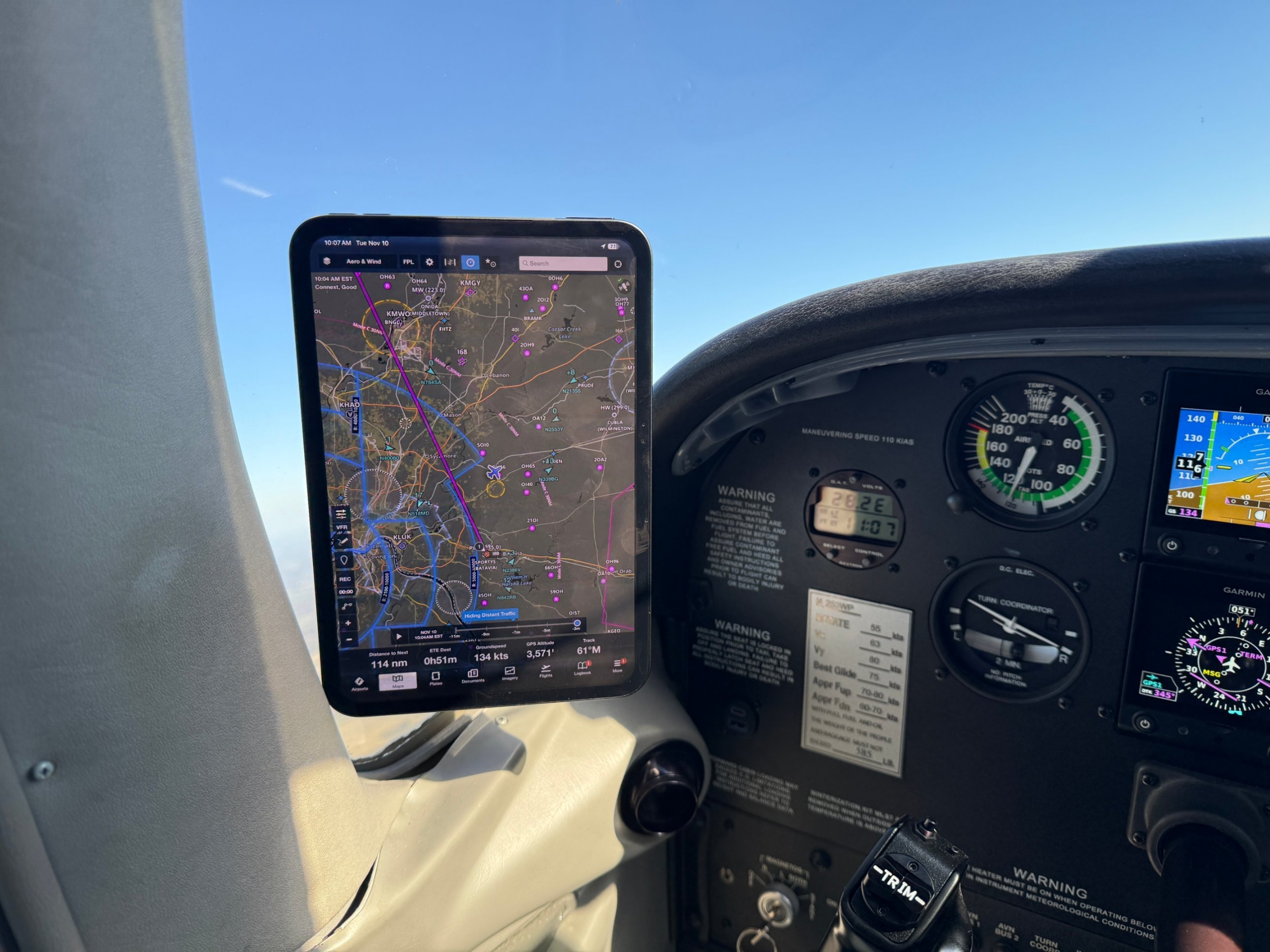
The experience in the cockpit was even better during our flight on a bright, sunny day. Whether the sun shone directly down on it while it sat on our lap in a kneeboard, or reflected off half the screen when mounted on a side window, the screen always stayed perfectly readable. Here’s an example where sun is shining only on the right side of the iPad, but you can barely tell:
The extra brightness helps too, overpowering sun glare. You’ll just need to be careful on hotter days, as you may not realize the sun is directly hitting the screen, increasing the risk of overheating and shutting down.
Another benefit of the coating is its ability to hide fingerprints. While the nano-texture doesn’t completely prevent fingerprint smudges, it definitely reduces them. Even then, if you’ve built up excessive fingerprints between screen cleanings, they are barely noticeable when the screen is powered on, compared to a regular glossy screen.
Mounting the new iPad Mini
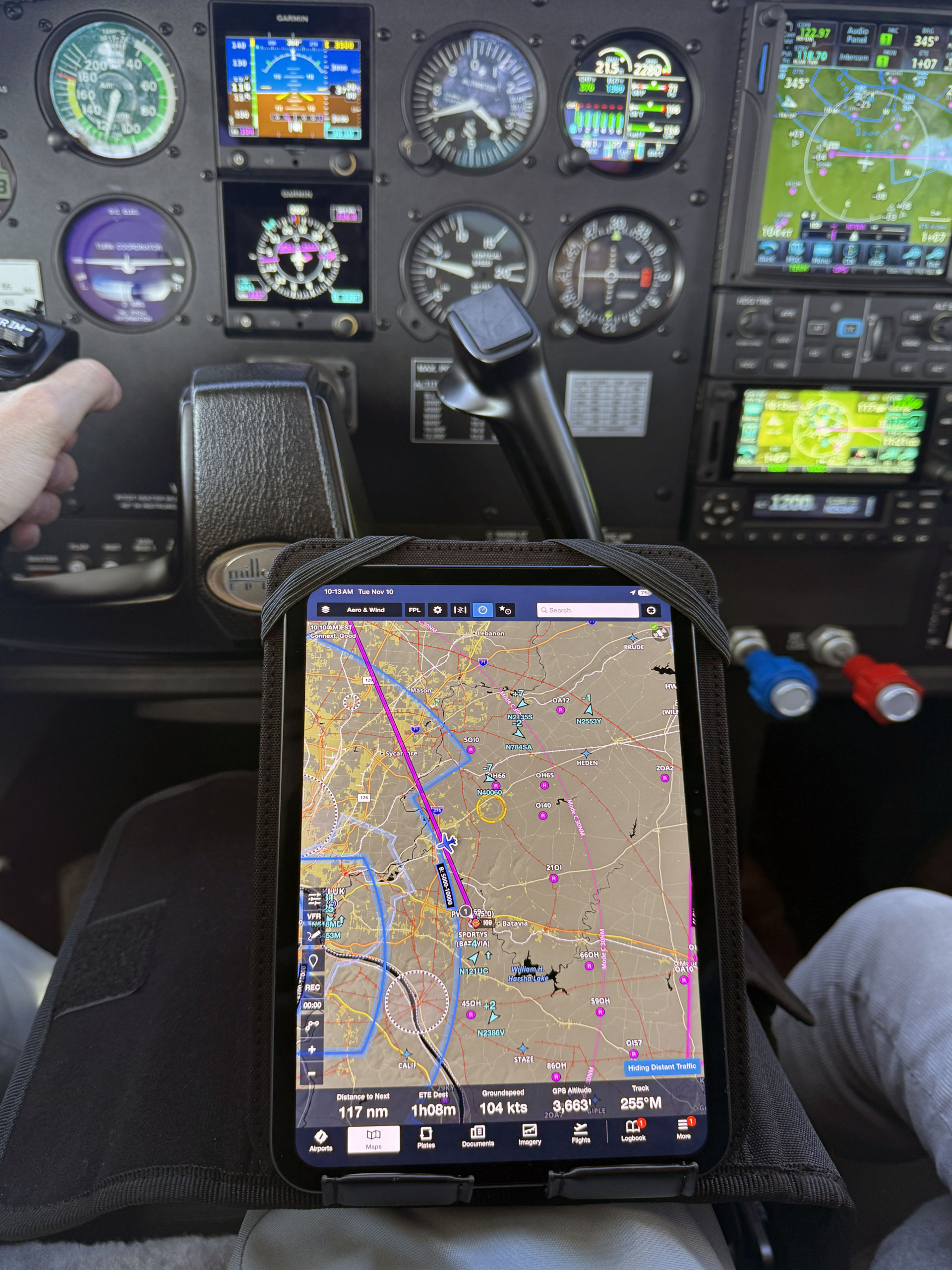
The good news is that most of the existing iPad Mini mounts work well with the new model. It fits in every kneeboard we tried, since their straps and universal brackets make kneeboards the most accommodating option. Here’s the Flight Gear iPad Organizer Kneeboard:
Here are other kneeboard options compatible with the new iPad Mini:
Flight Gear Rotating iPad Kneeboard
Flight Gear Executive Kneeboard
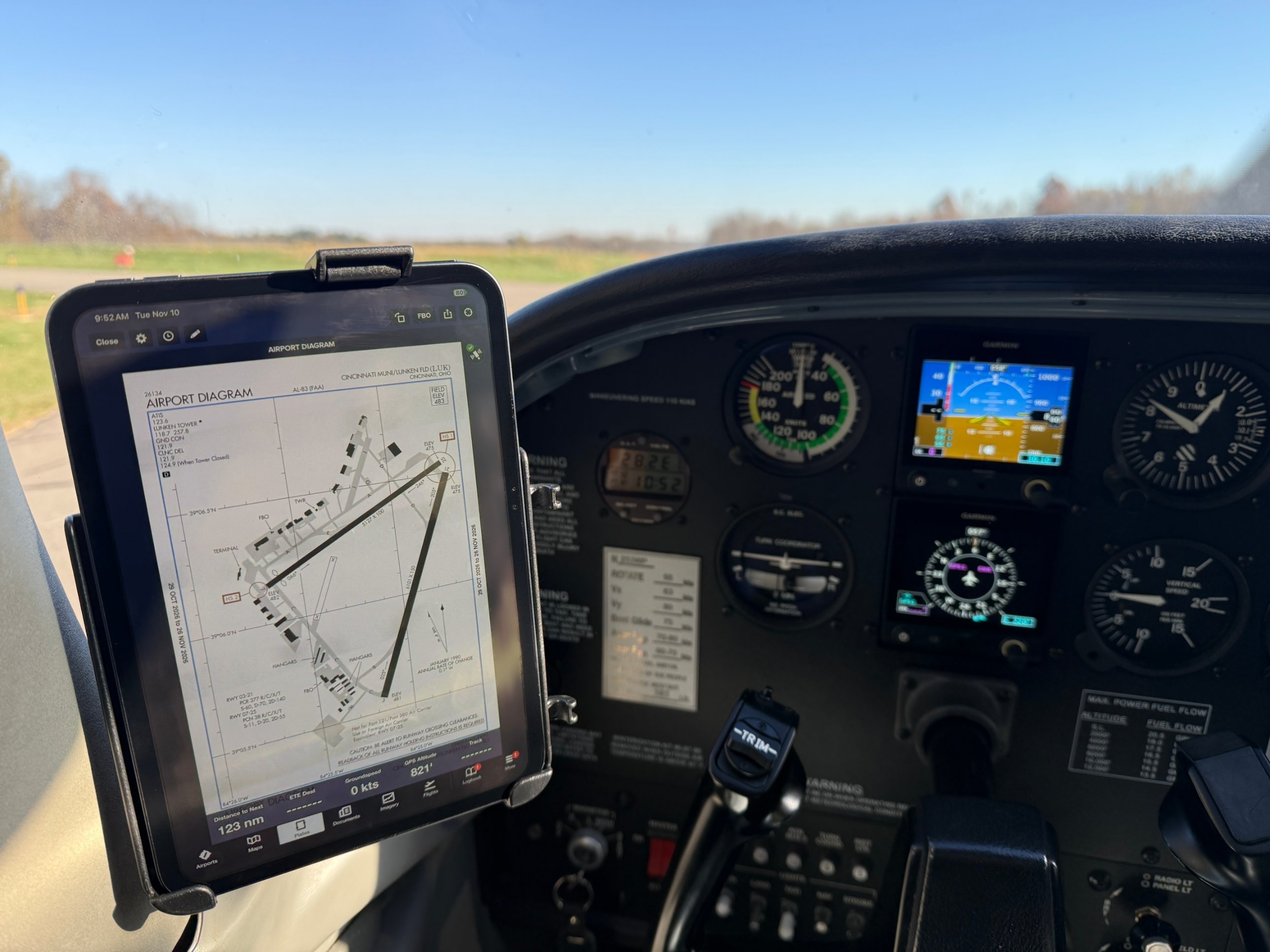
Another great mounting option is to use a cradle or grip and temporarily attach the iPad to your airplane with a suction cup window mount, yoke mount or clamp. Despite the new iPad Mini’s slightly smaller dimensions, we were surprised to find it fits well in the current iPad Mini RAM cradle. Here it is attached via suction cup to the side window, and this photo also illustrates the new nano-texture screen coating diffusing direct sunlight well:
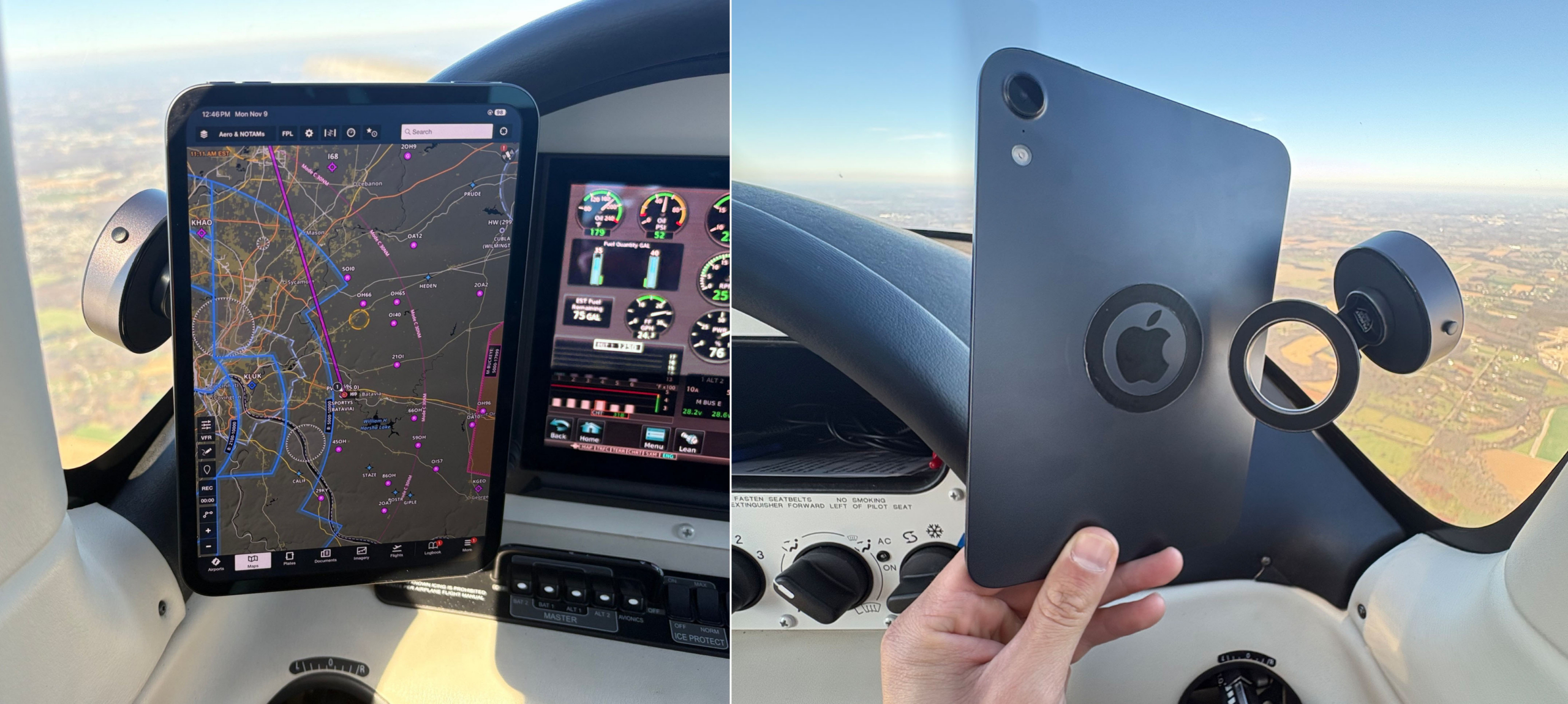
Our favorite iPad Mini mount, however, is the new Flight Gear Smart Suction Mount. It works by first attaching a thin but powerful round magnet to the back of your iPad for MagSafe compatibility. Then, press the battery-powered suction cup against the side window, and it mechanically locks in place with a secure grip. Then simply attach your iPad to the magnetic ring for a rock-solid hold.
The Smart Suction mount secures your iPad even in strong turbulence or bumps, provides a clean look with no cradle or grips to worry about, and lets you mount your iPad much closer to the window than other mounts. Best of all it includes both the magnetic ring and electric suction mount for less than $30.
Here are additional mounting options for the new iPad Mini:
RAM 7″ Tablet X-Grip Cradle (works well if you use a case)
Robust Universal iPad Suction Cup Mount
Robust Universal iPad Yoke Mount
 Price, availability, and should you upgrade?
After several flights with the iPad Mini, this is hands down the best iPad available for pilots today. The main downside, though: it’s not cheap.
The base model starts at $699 for the 128 GB Wi-Fi model, available in Midnight (dark gray) or Starlight (lighter champagne), with options to upgrade storage to 256 GB or 512 GB. This starting price is $200 more than the iPad mini from 2024, which reflects Apple pricing this as a premium product amid rising technology prices.
If you want the nano-texture screen (which we strongly recommend), you must select at least the 256 GB model. And then if you want to add cellular for the built-in GPS on top of that, you’re at $1,049.
So, should you upgrade?
- iPad mini 7 owners (2024): Your iPad still runs every aviation app well. If sun glare and screen brightness are a current issue, the nano-texture upgrade is worth a look. Otherwise, your current mini is plenty capable.
- iPad mini 6 owners (2021): While this model still runs the latest iPadOS 27, battery life is likely an issue, and performance can lag. We’d recommend an upgrade.
- iPad mini 5 or older: It’s time. The larger, brighter display, modern processor, and USB-C charging are a big step up.
- Student pilots and first-time buyers: The new mini is an excellent iPad for aviation use, but the $699 starting price might be too much for some. If you’re on a budget, consider a discounted or refurbished iPad Mini 7–the A17 model from 2024

- iPad Mini 8 PIREP: The best iPad for pilots Apple has made - November 18, 2026
- iOS Update Green Light program: iOS and iPadOS 27.2.1 - November 10, 2026
- iPad mini gets the upgrade pilots have been waiting for - October 28, 2026

Leave a Reply
Want to join the discussion?Feel free to contribute!