
The rise of “vibecoded” aviation apps: how to experiment while staying safe
If it feels like the number of aviation apps has exploded in recent months, you’re not alone. After years of relative boredom on the iOS App Store, suddenly there are dozens of apps for checking weather, calculating a flight’s risk score, finding flight schools, or logging time. Many of these apps have a strikingly similar appearance, with some combination of dark backgrounds and bold colors. What’s going on?
Welcome to the new world of app development, where an individual pilot with an idea and some AI tools can compete with established engineering companies like Jeppesen ForeFlight and Garmin. The results are simultaneously exciting and worrying.
Why apps are easier to build now
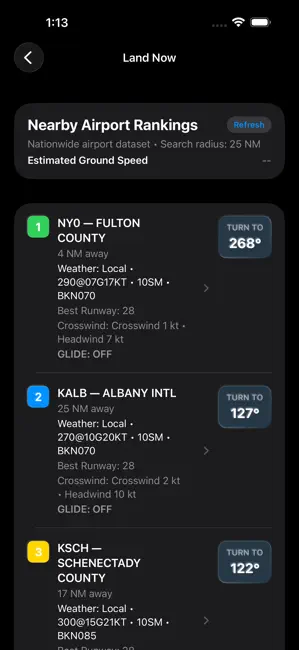 The driving force behind the huge growth in aviation apps is a new approach to software development, often called “vibecoding.” This phrase, which has modestly negative connotations in some circles, refers to a process that uses natural language conversations to dramatically reduce the time it takes to move from concept to functional app. Instead of spending years mastering Swift or Objective-C, you can just chat with Anthropic’s Claude Code or OpenAI’s Codex. The AI agent takes your concept, structures the database, builds the graphical interface, and packages the app for end users—with little or no code written by humans. It’s not quite as simple as explaining your idea to ChatGPT and getting a finished app, but it’s close. This represents a massive change for the software industry.
That change is obvious in both numbers and style:
- Numbers: Global App Store submissions, after being stable for years, nearly doubled in early 2026, right about the time AI coding tools took off. Apple has been scrambling to react, as their manual app review processes have been overwhelmed by the surge. There are simply a lot more apps than there were a year ago.
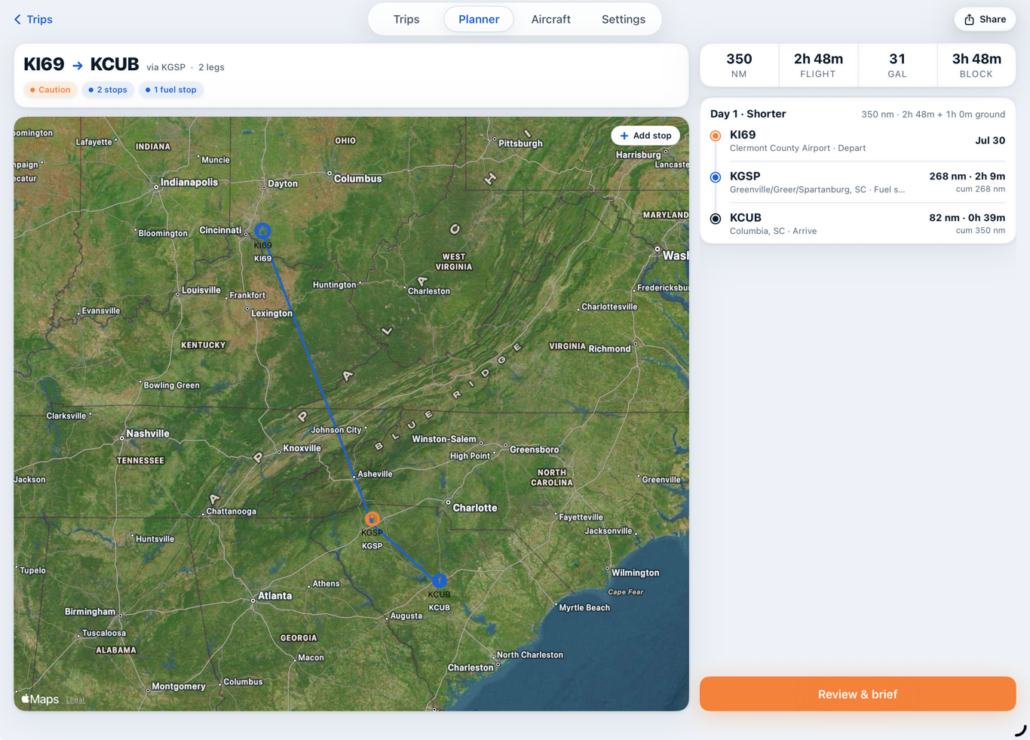
- Style: Most new apps have a “Claude look” that includes dark backgrounds, neon accents, techy-heavy fonts, and bordered card containers with rounded edges. Once you notice it, you’ll see the look everywhere. Vibecoded apps don’t have to look this way, but many do.
Good and bad changes
These changes are not necessarily bad. In some ways, it’s a return to the early days of the App Store, when pilots would eagerly search through an ever-changing list of new apps that promised to make their flying safer or easier. That level of innovation has been rare in recent years, as the options became fairly stale and smaller app developers either disappeared or were bought out. If vibecoding adds a little energy to the market, that’s a welcome change.
Having said that, history shows that quickly removing limitations can have unexpected consequences. The Internet and YouTube meant anyone could be a journalist or movie star overnight, which has been both good (inspiring flying videos from young content creators) and bad (outrageous “accident analysis” videos from unqualified crooks). While the options have increased dramatically, so has the standard deviation—the good content will get better and the bad content will get much worse. How can you tell the difference?
That’s the challenge for pilots in a world of vibecoded aviation apps: some will be exciting and creative solutions to previously unaddressed problems; some will be dangerously incomplete personal hobby projects. To state the obvious, this difference matters in aviation. It’s one thing if you download a puzzle game that isn’t reliable, but if your takeoff performance calculator is inaccurate it could cost you much more than the modest app subscription.
How to stay safe
Given those risks, here are a few rules for integrating new apps into your flying. Most of these were good habits before vibecoded apps appeared, but they take on extra importance when you don’t know which apps to trust:
A proof of concept isn’t a proven tool.
An app that works in a demonstration isn’t necessarily ready for the cockpit. Test its assumptions, look for edge cases, and verify its results before relying on it in flight.
- Test the app on the ground: The cockpit of a GA airplane is not the place to discover a critical bug or important limitation. Any new app should get a thorough test flight on the couch, where you have time to skeptically evaluate each feature. Don’t rush this step.
- Focus on edge cases: It has never been easier to build a proof of concept, but a POC does not equal a reliable app, and it’s the rarer scenarios that usually expose an app’s weaknesses. For example, I tested a handful of new weather or flight planning apps this summer, in preparation for flying to Oshkosh. Half of them showed forecasts for good VFR, even though thick wildfire smoke blanketed Wisconsin and scrambled arrivals. The problem? The app developers hadn’t thought to pull in smoke as a weather product, since it’s relatively rare. That’s a problem.
- Compare a new app to a reference: The way to detect these edge case failures is to check the output against a known source. In the case of the weather apps, it was easy to review forecasts and reports from ForeFlight, Garmin Pilot, or AviationWeather.gov. But it doesn’t have to be another app: check performance data against the POH or compare flight training advice with the FAR/AIM. You have to know what the right answer looks like to know if the new app is wrong.
Know what the right answer looks like.
Don’t make a new app its own source of truth. Compare its output with a trusted reference, such as your POH, official weather products, or an established aviation application.
- Verify data sources: Garbage in, garbage out is the first rule of software development, and it’s true whether you’re writing COBOL or chatting with Claude. Investigate the source of your app’s data by reading the documentation or even emailing the developer. Is the weather from the FAA or more experimental sources? Both might work, but it’s important to know the difference. Check how often data is updated (most airport and airspace data is updated on the 28-day AIRAC cycle). See how the app handles errors or incomplete data (does it fall back or just fail?).
- Have a backup plan: Again, this is great advice no matter the app. If that new app quits working (maybe because the developer loses interest, maybe because the server goes down), can you replace it with another app, printed document, or physical tool?
- Talk to the developer: Especially if your new app is mission-critical, it’s smart to do some investigation on the company (or person) behind it. Contact their support team to verify any details that are unclear, see how knowledgeable they are about the product, and get a general feel for the people who built the app.
Long established apps like ForeFlight and Garmin Pilot are not flawless, but they do have rigid testing and quality control processes in place to reduce errors and outages. If you’ve ever toured their facilities or talked to their teams at an airshow, it’s obvious they do not just roll out random updates or pull in data from any old source.
That’s also true for their use of new technology. Jeppesen ForeFlight recently released Airflow, a sophisticated AI platform for aviation which hints at some impressive features but also includes a number of guardrails. While some of the Airflow website is marketing, there are some good concepts to consider for any app, including verifying data integrity, keeping a human in the decision loop, and reviewing how a model made its decision.
Finally, consider the job your new app is doing. Some higher end features, like synthetic vision, performance planning, and flight plan filing should probably be left to established companies with a proven track record. For secondary tasks, like aviation event calendars, basic airport weather reports, or post-flight debriefing, a brand new app might fill a gap in your current app library.
“Trust, but verify” is cliched advice, but it’s a great way to approach most decisions in aviation. Apps are no exception.
Have you tried a vibecoded aviation app?
We’d like to hear about your experience. Share your thoughts in the comments.

- The rise of “vibecoded” aviation apps: how to experiment while staying safe - October 19, 2026
- Using an iPad for flying: how old is too old? - October 8, 2026
- Garmin introduces D2 Mach 2 Pro smartwatch with LTE, Iridium - April 24, 2026


Be careful about your terminology and assumptions. Modern software development is a managed agentic AI engineering process that is often better than human written code. This is the standard in high tech companies, academia, and research labs. “Vibe coding” is just throwing a problem at an AI system and accepting whatever it produces. Most (but certainly not all) companies would never resort to vibe coding, especially in mission-critical software
We just studied the reliability of agentic AI driven software development and the AI code came out better than the well-used and released human-written equivalents. But it requires human direction. The paper also outlines what you should expect from an best-practices AI software workflow. Check out: https://arxiv.org/pdf/2609.18298
–barton miller
vilas distinguished achievement professor of computer sciences
university of wisconsin-madison
To be clear, I am not opposed to using AI tools for software development. In 2026 if you aren’t, you’re just being stubborn. However, there is a difference between thoughtfully using Claude as just another in a long string of tools, and totally outsourcing your design and development to Claude. That, to me, is the difference and it matters for aviation.
I like a lot of the new apps being released, and I love the new energy. I just think pilots need to do a little more homework right now now.
Amen! Totally true.
I work in software design and AI still makes a lot of mistakes and still needs guard rails. If left unchecked the AI code becomes unmaintainable and riddled with bugs and security issues.
AI is tool to augment the dev’s not replace it.
I’m the founder and developer of PlaneWX, which is built with AI-assisted development, so I’ll own the “vibecoded” label. It’s an aviation decision support and risk management app with a Weather Briefing, an integrated FRAT, a Mentor Network and a post-flight Debrief.
Some background, because I think it matters here. I got into computing in 1994 and spent 22 years as an professional information security expert, hired by banks, utilities and healthcare organizations to break into their systems. I wrote my own code for years, then spent decades hiring professional developers. I also founded, built and sold a technology company.
“Vibecoding” gets a bad name, but AI-assisted development is a toolset. In experienced hands, with real engineering practices, security and testing, it can produce reliable software. In the wrong hands it produces slop. As an investor I wouldn’t back a tech company that wasn’t using it. As a pilot, I wouldn’t swap my EFB for a critical app from a nameless, faceless developer.
I tell PlaneWX users plainly not to trust our weather briefing blindly. I don’t. I cross-check weather, NOTAMs and TAFs against official sources, and I do the same with the major EFBs. The weather scoring in PlaneWX is rule-based, deterministic code, and the stakes are too high to skip the cross-check.
I agree with the article. Pilots should be skeptical of any app that could touch an in-flight decision.
After 30 years of experience in numerical analysis (using computers to do math), I feel the public at large is making a number of unwarranted assumptions about what “AI” is and its limitations. I have no problem with someone using a language model to develop a handy app, but when it comes to making go/no-go decisions..? If it’s not an obvious call, I’m doing what I’ve always done and calling Flight Service to talk to a human.
My comments are rather jaded because I was a Weather Observer in the USAF. During the transition of the automated weather and the observed weather it became clear that there is no way to tell where a pilot will find dangerous weather-related places.
From actual experience, I can tell you that within a runway’s distance (3 to 5 miles today) the Wx can go from clear to deadly. If you have to consider airspace, even radar can be fooled. Until we find a way to see air, and earth at the same time and same place, no AI can be a one-time shop. Ever get surprised by turbulence? Pilot reports are too few. Weather is generally considered only as general information. AI is cool but just another tool.
I agree with you regarding the level of certainty that any tool provides.
For turbulence, PlaneWX looks at three models – the GFS, the HRRR, and the ECMWF. We determine consensus between the models, and conduct model weighting for time of departure and geographic region.
We also look at both the GTG, and the GTG-N.
We then look at PIREPs to corroborate the models.
All of these models and products often get turbulence wrong. I brace myself for a bumpy ride, and it turns out to be smooth, when all products agree about moderate turbulence. The products are most often conservative rather than missing a turbulence call.
Flying is just an uncertain activity with lots of variables.
vibe coded apps are in the horizon. major legacy app developers like foreflight have layed off most of their development staff because they are no longer necessary to them . so in my respectful opinion , if a major company is willing to lay of most of their people while in the meantime charging even more, it only makes sense to the wave of ai competitors that will soon hit the market.
ai apps are in thier infancy, but give it a year or two theyll be close to what companies spend tens of millions to develop , in five years all our paid subscription apps will have hundreds of vibe coded spin offs that are lower cost or free.
This comment hits the nail on the head. While pilots were beholden to expensive subscription based apps before, this surge in supply will help bring down the ever-growing cost of aviation. The biggest win in my opinion is the GA pilots who’ll have access to SMS level safety programs. While I also agree that pre-flighting a new app, as the author mentions, is always good practice.
This is the exact mission at PlaneWX – bring professional grade tools, such as a high quality SMS to general aviation – and we do it for free.
This is a great question that has multiple aspects. As someone who has been a life long programmer and data analysis teacher and consultant, progress has facilitated productivity by providing us with tools that help automate tasks that previously took us hours and were very error prone. Coding with AI tools such as Claude allow us to shift our focus from how to produce something to what it is we wish to produce. Whether I was programming in assembly language or Swift, we still must debug, iterate, and check for reliability and validity of results. Clearly, as an aviator designing apps I will not trust a product, whether it is developed by a programming team or Claude, until I am certain that it aligns with other validated sources of information.
It’s foreflight ad with extra steps. No need for word salad. too much problems in article.