

Is the new foldable iPhone Duo a good fit for pilots?
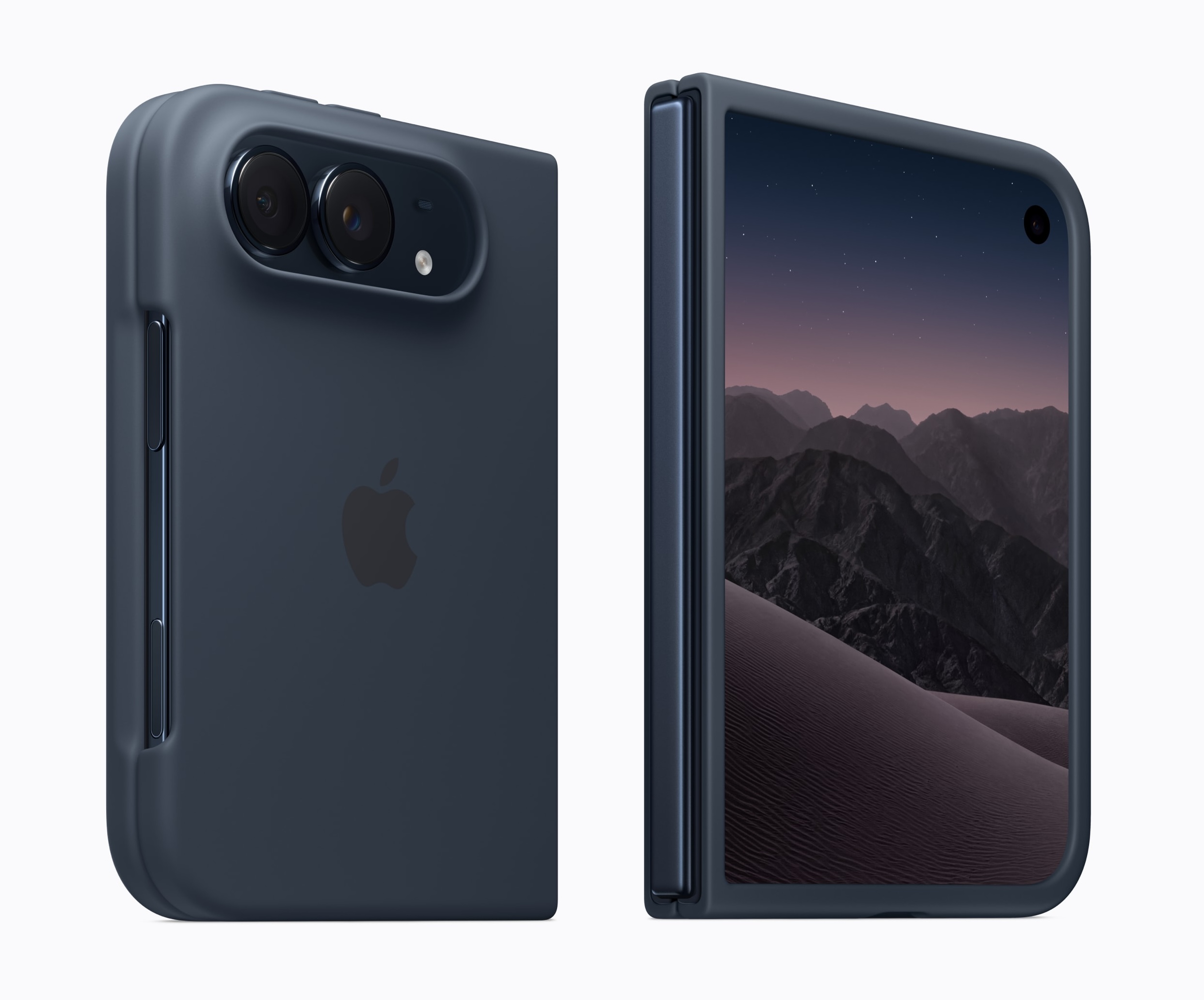 Apple unveiled a new clean-sheet iPhone design last week at its annual press event. The new iPhone Duo is Apple’s first foldable device, with a phone-sized front screen that opens to reveal a much larger inner display.
When opened, the inner screen is nearly the size of an iPad Mini, which has caught the eye of many pilots looking for a single replacement for both an everyday phone and an EFB in the cockpit. Here’s a first look at the new iPhone Duo and our initial thoughts.
iPhone Duo Specs
The iPhone Duo isn’t the first foldable mobile device to hit the market. The Samsung Galaxy Fold has been around for nearly 7 years and has a similar design. In typical Apple fashion, though, they aimed to perfect the user experience by tightly controlling both hardware and software to create a more premium experience.
When the Duo is closed, you can interact with a 5.4″ screen on the front that offers a traditional iPhone experience. The aspect ratio is closer to a square than traditional mobile phones, but still offers around 90% of the screen real estate of an iPhone 18 Pro.
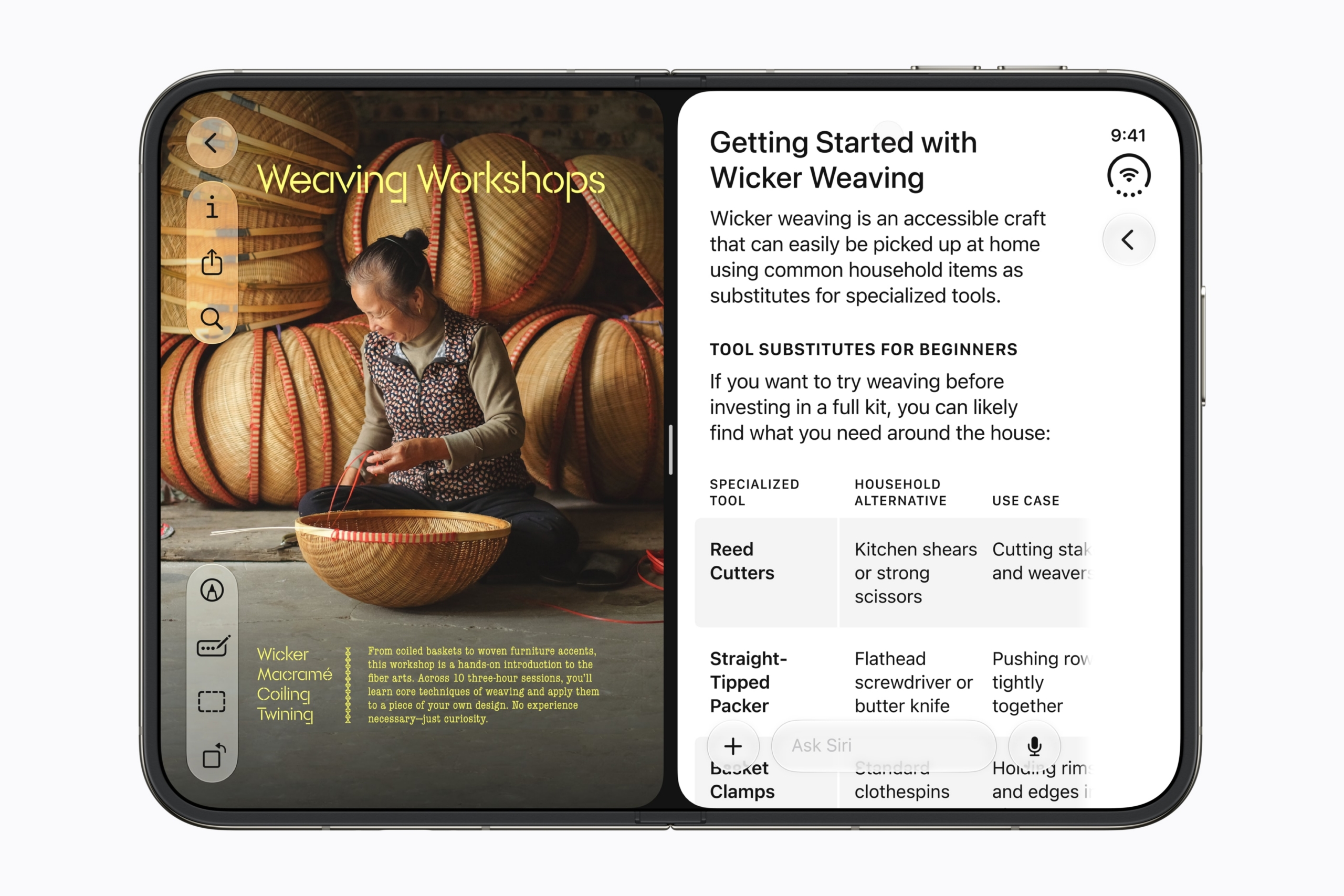
Then open up the Duo like a small book to reveal a much larger 7.6″ OLED screen that provides an experience similar to using an iPad. By comparison, the latest iPad Mini is 8.3″ diagonal and approximately 9% larger overall.
The Duo incorporates two lithium-ion batteries (one in each half of the device) providing impressive battery life for an iPhone, and it’s even more impressive compared with an iPad Mini. For typical daily use of both the inner and outer screens, expect around 24 hours of battery life. In similar use cases, the iPhone Duo’s inner screen lasts 3x longer than an iPad Mini, thanks to efficiency gains from the new A20 processor.
Like other modern iPhone models, the Duo includes both a USB-C port and MagSafe wireless charging. Like the new iPhone 18 models, it supports 60W fast charging (previous iPhones maxed at 40W), meaning you can charge to 50% in just 20 minutes. The MagSafe wireless charger supports up to 25W, bring the battery up to 50% in 30 minutes using that method.
Both the inner and outer screens use Apple’s latest Super Retina XDR OLED displays. Keeping with the iPad Mini comparison, the Duo offers a faster 120Hz refresh rate vs. the iPad Mini’s 60Hz for smoother screen interactions. The Duo’s inner screen is much brighter too, maxing out at 3,000 nits, vs. 500 for the iPad Mini.
iPhone Duo Compromises
The Duo is far from perfect, and there will naturally be some compromises when you try to cram both a handheld iPhone and tablet-size screen into one device. First, the inner screen must be flexible in the middle as it bends to fold. This “crease” was fairly noticeable in the early Samsung foldable phones, but based on early reviews at Apple’s press event, it’s barely noticeable on the Duo. A sophisticated hinge behind the crease supports the Duo’s folding capabilities. Apple takes hardware engineering seriously, but both the screen crease and the hinge’s mechanical action are untested, so it’s still unclear how they will hold up after years of use.
When unfolded, the Duo measures only 5.2mm thick, the thinnest iPhone yet. However, when folded, the depth doubles to 11.3mm, and it would definitely be more noticeable in your pocket. The Duo weighs 0.56lbs, right between the lighter iPhone 18 Pro (0.47 lbs) and an iPad Mini (0.65 lbs). That’s likely manageable, but worth considering since it’ll be with you at all times.
This thinner size also means compromises on several core features. It lacks Face ID, so biometric unlocking uses Touch ID. It has cameras on both the back and inner display, but no telephoto option like the recent iPhone Pro models. On the plus side, the inner screen contains no notches or cutouts, thanks to the FaceTime camera being embedded under the display.
The iPhone Duo as an EFB
The iPhone Duo is available for pre-order starting Friday, October 16, so we can only speculate about its utility in the cockpit for now. Pilots have been flying for years now using the larger iPhone Max as a primary EFB, and it works well if you have eagle eyes and don’t mind interactions on a smaller screen. If you consider the iPad Mini’s 8″ screen size the bare minimum, the Duo’s inner 7.6″ screen might appeal if you want to eliminate one piece of hardware from the flight bag. Despite a slightly smaller screen, the Duo’s battery should last at least twice as long as an iPad Mini. And based on the tech specs mentioned earlier, the screen can reach a much higher peak brightness.
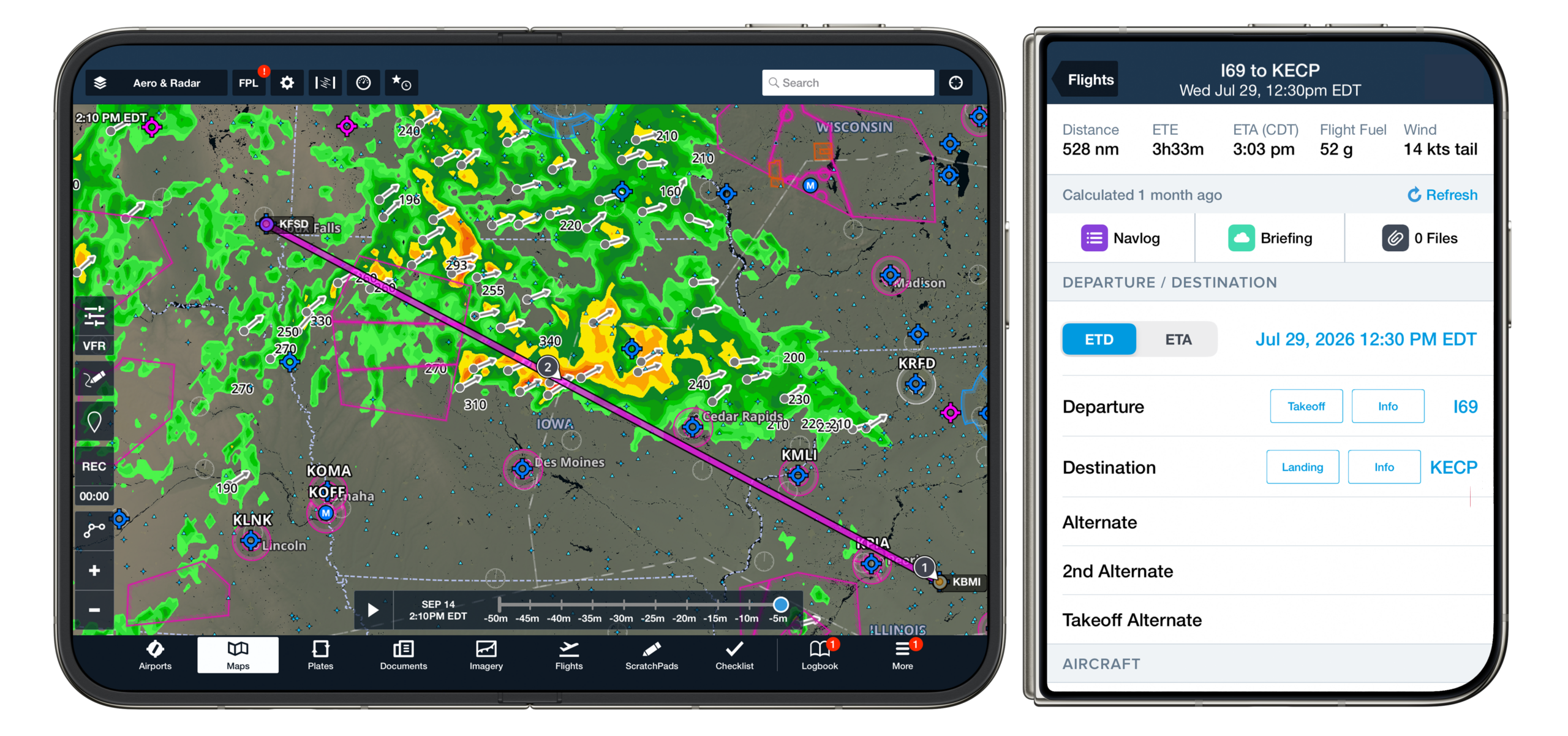
A new potential challenge, though, will be mounting. There are many reliable, low-cost options for mounting a traditional iPhone, like suction cups with MagSafe magnets or clamp attachments. You can mount the Duo similarly using the magnet on the back, but likely only in the folded position to view the smaller front screen. It’s also unclear how a traditional clamp or cradle mount would work with the Duo without putting pressure on the folding mechanism when it’s opened.
Then it comes to your personal preference about whether flying with one EFB and a single point of failure makes sense. If you’re primarily flying VFR and have a glass panel or Garmin GTN navigator installed, a single iPhone EFB makes perfect sense. However, if you’re flying single-pilot IFR and relying on your EFB for IFR charts and weather, we recommend always having some type of backup on hand. For most pilots, this means flying with an iPad front and center and keeping an iPhone or second iPad on standby.
Lastly, trading in your iPad Mini and iPhone for a Duo won’t save you any money. The base-level iPhone Duo with 256GB starts at $1,999, while you could buy both a new iPad Mini and iPhone 18 Pro for $1,798. If you’re an early adopter and want Apple’s latest tech, this new iPhone is definitely worth checking out. Just make sure to hold onto your iPad until you get some flights in first, so you can learn what works and what doesn’t in the cockpit.

- Is the new foldable iPhone Duo a good fit for pilots? - September 14, 2026
- iOS Update Green Light program: iOS and iPadOS 27 - September 13, 2026
- iPad charging tips for pilots—it’s all about the watts - September 8, 2026

Leave a Reply
Want to join the discussion?Feel free to contribute!