
Backup Battery Roundup: How Much Power Do You Really Need?
|
Getting your Trinity Audio player ready...
|
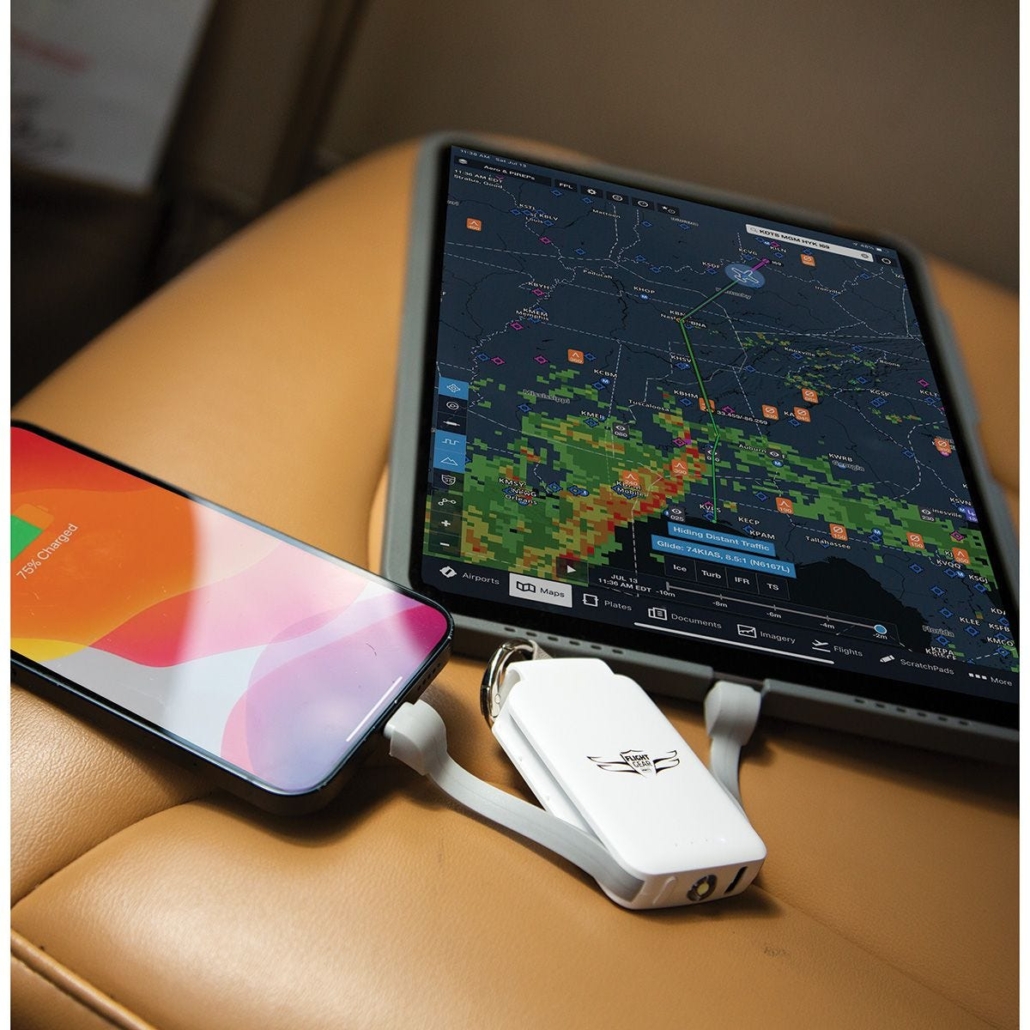
The iPad is a core component of our modern flying. For many pilots, it’s the primary source for charts, manuals, weather, performance, traffic and even entertainment. Even when it’s technically supplemental, it often functions as essential equipment. And essential equipment deserves a backup plan.
Most iPads offer solid battery life initially, but brightness settings, ADS-B receivers, cellular data, cold temperatures, and age can shorten that endurance. Add a long cross-country or multiple legs in a day, and battery management becomes an issue.
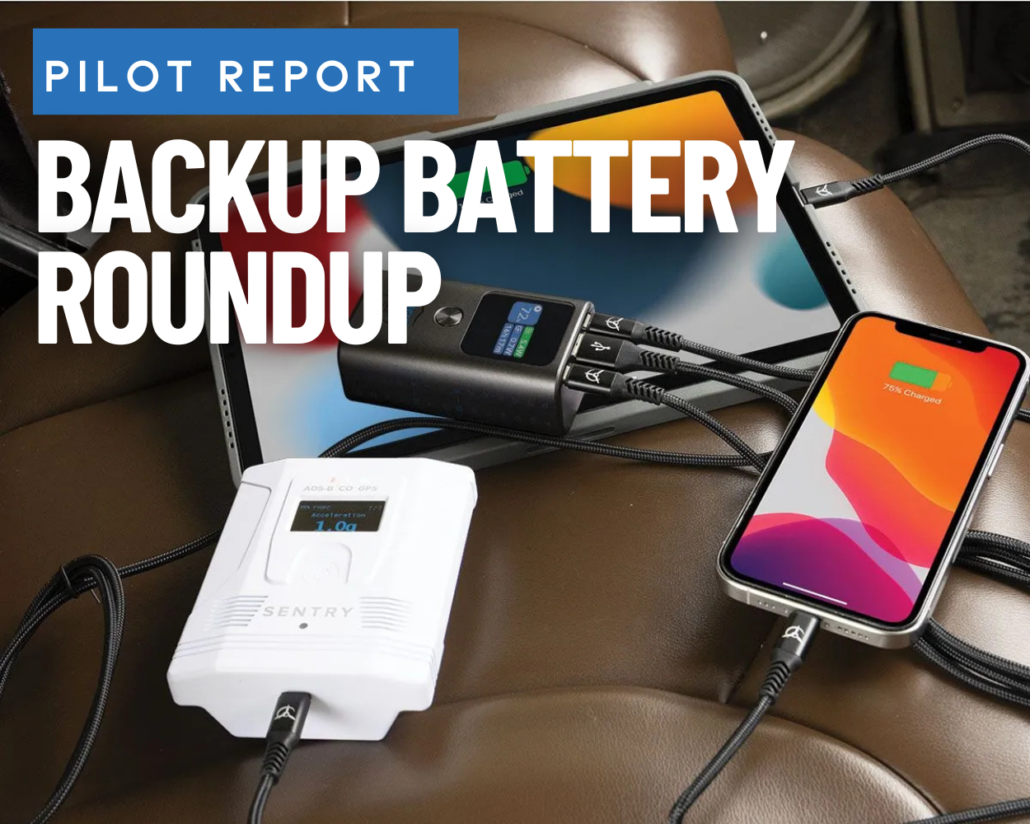
A backup battery isn’t about worst-case scenarios—it’s about building in margin like everything else we do when operating the aircraft. Here’s a look at three backup battery options, ranging from ultra-compact emergency power to a high-capacity smart pack built for multi-device cockpits.
Backup Batteries
 Level 1: The “Just in Case” Option
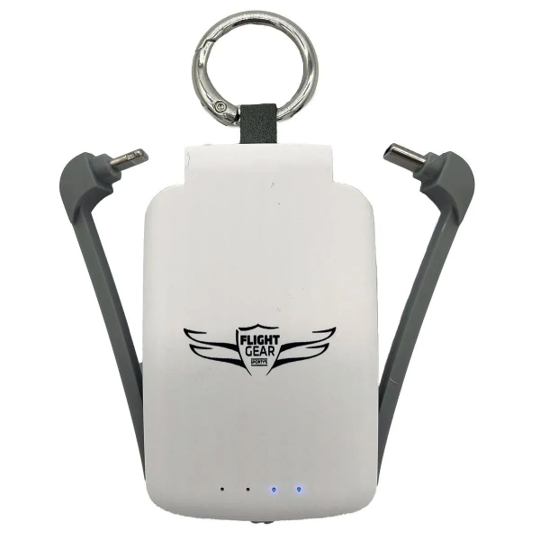
Flight Gear Emergency Backup Battery (2,000 mAh) – $14.95
This is true emergency power.
At 2,000 mAh, it won’t fully recharge an iPad—but it can buy you time. Think of it as a short extension: enough to stretch your device to the destination, top off a phone, or power up briefly on the ramp.
Built-in USB-C and Lightning cables eliminate the need to carry separate cords, and the compact size makes it easy to stash in a flight bag or clip to a key ring. There’s even a small integrated flashlight with a strobe mode.
Lightweight, inexpensive, and easy to carry, this option is about having a cushion—not endurance.
 Level 2: The Everyday EFB Backup
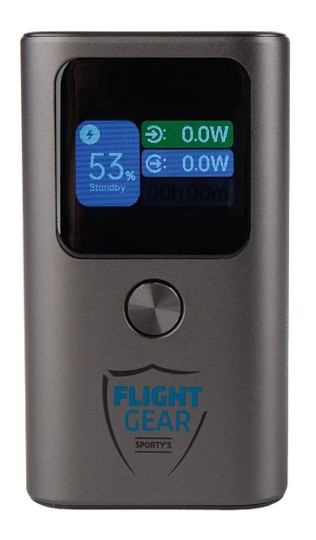
Flight Gear Smart Battery Pack (10,000 mAh) – $49.95
For many pilots, 10,000 mAh is the practical sweet spot.
It’s enough capacity to recharge an iPad roughly once, or support multiple devices during a typical cross-country. Two USB-C ports and one USB-A port allow up to three devices to charge simultaneously.
Designed with cockpit use in mind, it has been tested in multiple aircraft to ensure clean operation with no radio interference. Intelligent power management adjusts output automatically, while built-in protections guard against overheating and overcharging.
Compact and durable, this is a reliable everyday backup for pilots who depend on their iPad as part of their normal workflow.
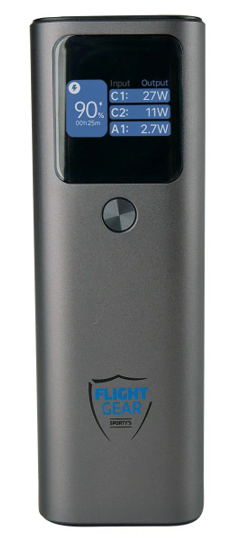 Level 3: Maximum Capacity
Flight Gear Smart Battery Pack MAX (27,600 mAh) – $99.95
If you prefer substantial endurance, the MAX delivers.
With 27,600 mAh, it can recharge an iPad mini approximately 4.5 times and power higher-demand equipment, such as a Starlink Mini, for more than two hours. Three charging ports allow multiple devices to run simultaneously, and pass-through capability lets you recharge the battery while it powers your gear.
A built-in digital display shows real-time power levels and temperature monitoring, eliminating guesswork.
For longer cross-countries or more complex digital setups, this model provides meaningful redundancy in a compact package.
Quick Comparison
| Model | Capacity | Best For | Price |
|---|---|---|---|
| Emergency Backup | 2,000 mAh | True emergency top-off | $9.95 |
| Smart Battery Pack | 10,000 mAh | Everyday EFB redundancy | $49.95 |
| Smart Battery Pack MAX | 27,600 mAh | Multi-device / multi-leg / Starlink | $99.95 |
Reader Poll:
The Power Ecosystem
A backup battery is only part of the equation. Cables and charging strategy matter just as much.
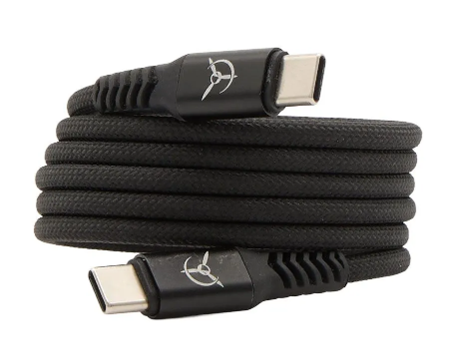 Magnetic Charging Cables
Flight Gear’s magnetic charging cables coil into a compact circle, keeping cords organized and reducing cockpit clutter.
Available in USB-A to USB-C (15W) and USB-C to USB-C (100W), they support everything from phones to iPads and laptops. Durable nylon-braided construction and cockpit testing round out the package.
A small upgrade—but one that makes daily flying noticeably cleaner.
Fast Wall Charging
The Flight Gear Three Port Smart Charger (65W) is well suited for quick turnarounds. Two USB-C ports and one USB-A port support fast charging, and the digital watt display confirms power delivery at a glance. Foldable plugs make it easy to travel with.
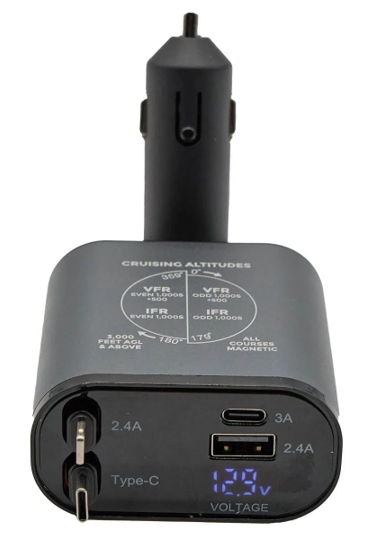 In-Flight 12/24V Charging
For aircraft equipped with a power outlet:
The Flight Gear Dual USB Quick Charger adds two high-output ports plus voltage and amp monitoring.
The Flight Gear Retractable 12/24V Charger integrates USB-C and Lightning cables for a tidier cockpit setup.
Both provide flexibility; the retractable version emphasizes organization.
How much power?
The question isn’t whether your iPad will eventually need power—it will. The better question is how much margin you want to build in to your setup.
Some pilots are comfortable with a small emergency buffer. Others prefer enough capacity to power multiple devices for hours. Fortunately, there’s an option for both approaches.

- Starlink Mini: Mounting Options Compared - March 6, 2026
- Backup Battery Roundup: How Much Power Do You Really Need? - February 27, 2026
- Product Report: Flight Gear Smart Suction Mount - February 13, 2026


Short flights: I enter the cockpit with a fully-charged iPad and iPhone (both with current charts downloaded). Attach both to ship’s power so they are always fully charged until the plane loses its electrical system. At that point I would turn off the iPhone to preserve its battery. Then I can attend to other aspects of the emergency without worrying about charts (though I will lose ADS-B in weather and traffic and precise GPS positioning on the devices once my transponder runs out of ship’s battery power because I no longer carry a portable ADS-B in device). I will be on the ground long before the iPad and then the iPhone battery give out, even in their not-fresh-from-factory battery capacity.
Longer flights: I add my previous iPad as a second backup (with current charts but powered off until needed) and carry a backup battery because I never travel far from home–by car, commercial flight, train, boat, feet, or my plane–without the backup battery. With three fully-charged devices (all covered by the same EFB subscription at no extra cost), the backup battery is almost certainly not necessary for safety of flight.
So I’ve got redundant charts and approach plates for any conceivable situation short of an EMP that fries all my electronics or a malicious bug that cripples them all at the same time. Ship’s power + two devices covers almost all scenarios. A third device puts rational worries to rest. With three fully-charged devices and a backup battery, even the paranoid like me can feel secure without paper charts.